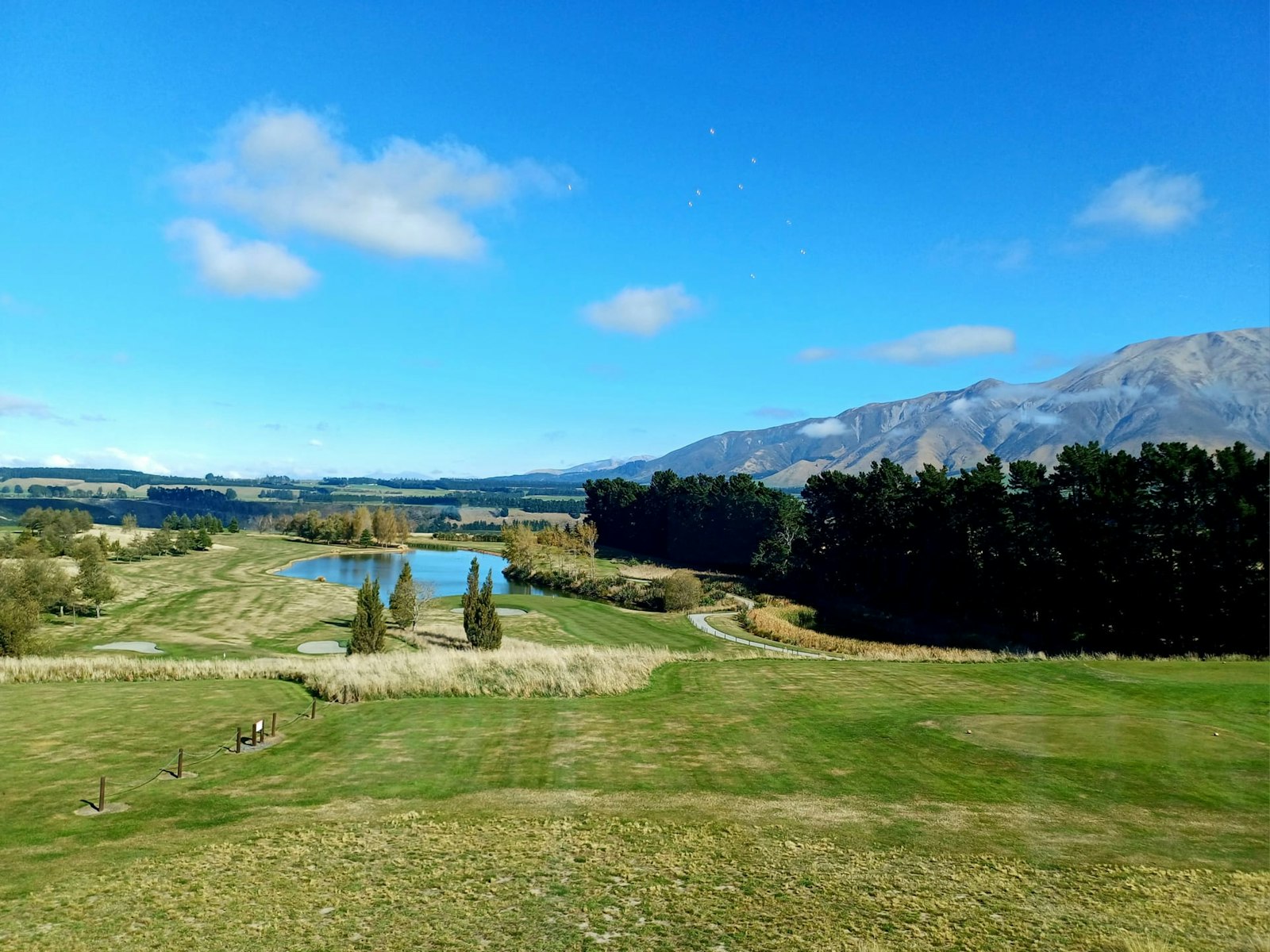
Blue Ridge mountain golf means two different things. If you're in Georgia, it usually means the town of Blue Ridge and the courses around Fannin County. If you're in Tennessee or North Carolina, it means the whole Blue Ridge range: Boone, Asheville, Cashiers, Highlands.
This guide covers both. Courses from North Georgia up through Western North Carolina that sit in Blue Ridge terrain, with honest notes on each. If you're planning a golf trip along the range, this is where to look.
What Blue Ridge golf feels like
Three things define it. Elevation change that works the feel of every shot. Trees (mostly hardwoods) framing every hole. Weather that can flip mid-round, from clear to fog to rain and back.
The ball flies farther up here. Valley courses in the Blue Ridge still run 1,400-2,000 feet in elevation. Higher courses push past 3,000. At 3,200 feet, expect 6-8 more yards on every full shot.
Greens don't get as fast as flatland championship surfaces. Mountain maintenance crews back off stimp speed because steep slopes plus fast greens equals three-putts for the whole field. Expect 9-10, not 12.
North Georgia Blue Ridge courses
Apple Mountain Golf Club (Clarkesville)
Phillip Ballard design, 1994. Par 72, 6,428 yards from the Blue tees. Slope 119, rating 69.9. Elevation roughly 1,400 to 1,800 feet across the property. 18 holes with cart from $49 weekday, $65 weekend.
The cheapest quality mountain golf within 90 minutes of Atlanta. Ranked #2 Most Improved U.S. Golf Course by Golf Advisor in 2020. The course walks the line between tight and open, which means higher handicaps stay in play and lower handicaps can still score. Good jumping-off point for a longer Blue Ridge trip. Course details here.
Brasstown Valley Resort (Young Harris)
Denis Griffiths design, par 72, 6,971 yards. Sits higher than Apple Mountain with more elevation drop. Green fees $85-$135. Resort lodging on site. The "bigger trip" option in North Georgia.
Old Toccoa Farm (Mineral Bluff)
Mike Riley design, par 71, 6,823 yards. Near the town of Blue Ridge itself. Relatively new course (2017). Greens are strong. Mountain views on nearly every hole. Green fees $95-$135. A course that's built a reputation quickly.
Western North Carolina
Mountain Air Country Club (Burnsville)
Par 72, 6,502 yards. Sits at 4,800 feet. Views from the top holes that aren't matched in the Southeast. Semi-private, check availability. Green fees $95-$175.
The elevation change is significant enough to feel in the legs. A walking round is a workout most weekend players aren't ready for. Ride.
Grandfather Golf & Country Club (Linville)
Ellis Maples design, par 72, 6,846 yards. Private, members only and guests. If you can get on, do.
Mount Mitchell Golf Club (Burnsville)
Par 71, 6,495 yards. One of the oldest courses in the region, with sight lines to Mount Mitchell, the highest peak east of the Mississippi. Semi-private, daily fee play available. Green fees $65-$95.
Linville Golf Club (Linville)
Donald Ross design, 1924. Par 72, 6,780 yards. This is the historical heavyweight of the region. Semi-private, access through the resort or as a member guest. If you're a design nerd, make it happen.
How to plan a Blue Ridge golf trip
Three-day weekend from Atlanta
Drive up Friday afternoon to Clarkesville or Young Harris. Play Apple Mountain Saturday morning. Drive up to Old Toccoa Farm Saturday afternoon or Sunday morning. Drive back Sunday.
Budget: $450-$700 per person including green fees, lodging, and food if you split a two-bedroom suite four ways.
Five-day trip along the range
Day 1: Apple Mountain. Day 2: Brasstown Valley. Day 3: Old Toccoa. Day 4: Mount Mitchell or Mountain Air (cross into NC). Day 5: Drive back, light morning round or travel day.
Base out of two properties. Apple Mountain for nights 1-3, somewhere in NC for night 4. Or all five at Apple Mountain if you're willing to drive an hour each way for the NC day.
Solo design pilgrimage
Linville (Donald Ross), Grandfather (Maples), and Old Toccoa (Riley). Three days, three designers. Not cheap but a real trip.
What to bring
Layers. A 55-degree morning at 3,000 feet turns into 75 by noon and back to 60 by the time you finish. A light pullover in the cart makes a difference.
Extra balls. Tree loss is higher here than on flatter courses. Bring twice what you normally would.
Proper walking shoes if you plan to walk. Mountain walks are unforgiving on bad footwear.
A yardage app with slope adjustment. Written yardages don't tell the real story on elevation-heavy holes.
When to go
Fall is the draw. October 15 through November 10 is the two-week color window, with the best week moving slightly each year based on weather. Book tee times 4-6 weeks out for October weekends.
Spring is nearly as good and much less crowded. April and May give you dogwoods, rhododendron blooms, and rates 15-20 percent below fall peak.
Summer plays well from about 7 a.m. to 11 a.m. Afternoon thunderstorms are common. Morning tee times are the move.
Winter varies by course. Apple Mountain, Brasstown, and Old Toccoa stay open year-round with rare weather closures. Higher-elevation NC courses close several times a winter for snow.
A note on pace
Mountain golf takes longer. Factor an extra 20-30 minutes per round vs a flatland course. Walking rounds at higher elevations can push five hours not becuase of slow play, just because the terrain demands more rest between holes. Not a bug, part of the feature.
How Blue Ridge courses compare to Pinehurst
Georgia and North Carolina golfers get asked this: why not just drive to Pinehurst. Fair question. A few reasons Blue Ridge mountain courses hold up against the Sandhills.
First, terrain. Pinehurst is sand pine hills with roll, but it's not mountains. Blue Ridge has actual elevation change hole to hole. If that's the kind of golf you want, Pinehurst doesn't deliver it.
Second, travel. Pinehurst from Atlanta is 6 hours. Apple Mountain is 90 minutes, Brasstown Valley is 2:15, Old Toccoa is 2 hours. The math on a two-day trip is very different.
Third, crowds. Pinehurst is the capital of destination golf in the Southeast. Tee times book months out, the village is full of golfers year-round. Blue Ridge courses are quieter, especially midweek. Not a negative if you want to play.
The tradeoff: Pinehurst has more courses in a smaller area, a deeper design history, and conditioning that's the best in the region. If you want a once-in-a-few-years pilgrimage, go. For a regular weekend trip, Blue Ridge wins on logistics.
Where to book lodging along the range
For a North Georgia base, Apple Mountain Resort has two-bedroom suites that work well for golf groups. The resort site handles bookings.
For Brasstown Valley, book directly through the resort. Lodge rooms and cottages, both fine.
For the Blue Ridge town area, cabin rentals on VRBO are the play. Look for properties within 15 minutes of Old Toccoa Farm if that's your main course. Avoid the downtown rentals if you want quiet.
In Western North Carolina, Linville has the historic Eseeola Lodge. Mountain Air Country Club has owner-rental cottages when available. Boone and Blowing Rock have more hotel options, if you prefer not to rent a house.
Start Your Blue Ridge Trip at Apple Mountain
The easiest Blue Ridge mountain golf to reach from Atlanta. 90 minutes north, 18 holes with cart from $49 weekday, two-bedroom resort suites from $179/night for groups.
Book a Tee TimeFor more on the specific courses within driving distance of Atlanta, see Best Golf Courses Near Atlanta. For a deeper look at the mountain courses in Georgia specifically, Mountain Golf in Georgia: Where to Play is the companion piece.